
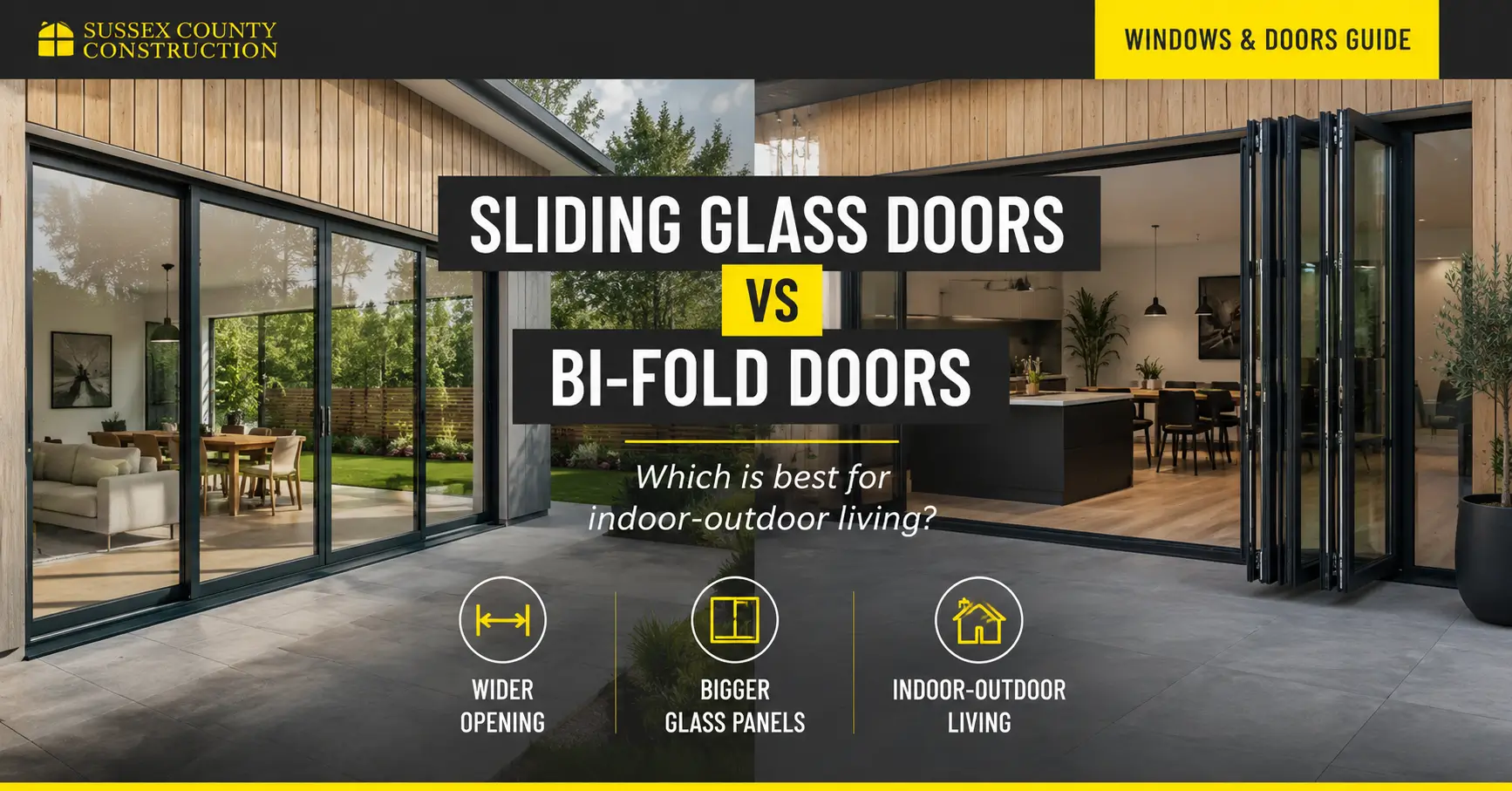
If you are choosing between bifold doors or sliding doors, the best option depends on what matters most in your space. Bifold doors can open up almost an entire wall, creating a wide connection between the house and garden. Sliding doors usually keep more glass visible, need less operating space and often suit homes where uninterrupted views are the priority. Professional windows and doors installation services should also consider the opening, threshold, drainage, structure and how the room is used every day. You will see how each system compares in everyday use, comfort and design.
The decision is not simply about which system looks more modern. It is about how much opening you want, where the panels will sit, how often the doors will be used, how the room is furnished and how exposed the property is to weather. Below, we compare bifold vs sliding doors in practical terms, including views, access, maintenance, energy performance and useful alternatives.
Bifold Doors or Sliding Doors: The Short Answer
Choose bifold doors if your main goal is to create the widest possible opening between an interior room and an outside area. When fully folded, the panels stack to one or both sides, leaving most of the opening clear.
Choose sliding doors if you prefer larger panes of glass, slimmer-looking sightlines and a simple opening action. Sliding panels move along a track and remain within the width of the opening, so they do not need a folding stack projecting into the room or patio.
Neither option is automatically better. The right choice is the one that works with the proportions of the opening, the architecture of the property and the way the space is actually used.
| Feature | Bifold Doors | Sliding Doors |
| Maximum opening | Very wide, often most of the aperture | Part of the aperture usually remains covered |
| Glass area when closed | More frame divisions | Larger uninterrupted panes |
| Space needed to operate | Panels stack at the side | Panels stay on their track |
| Everyday access | Can include a traffic door | Simple sliding access |
| Best suited to | Wide-open indoor-outdoor connection | Views, light and clean glazing lines |
How Bifold Doors Change the Feel of a Room
Bifolds concertina along a track. Several hinged panels fold together and stack at the side of the opening. This makes them effective for extensions, kitchen-diners and rear living spaces intended to open directly onto a patio or garden.
The biggest advantage appears when the doors are fully open. A conventional wall opening can almost disappear, allowing people to move freely between the two areas. For summer gatherings and open-plan family spaces, that wide access can be a major benefit.
Closed bifold doors have more vertical frame lines than most sliding systems because each panel needs its own frame. Some homeowners like the rhythm this creates. Others prefer fewer interruptions across the garden view.
A configuration with a traffic door can also make everyday access easier. You can use one panel much like a conventional door without folding the whole set back.
Why Sliding Glass Doors Appeal to So Many Homeowners
Sliding doors use large glazed panels that move sideways on a track. One or more panels slide behind another panel or into a designed pocket, depending on the system.
Their main attraction is the amount of glass. Modern sliding doors can create broad garden views with fewer frame divisions than bifolds. Even when the doors are closed for much of the year, the room can still feel strongly connected to the outside.
For many homes in Sussex, that year-round view can be more useful than having the largest possible opening for only part of the year. A well-planned Sussex County Construction project should therefore consider how the doors perform both open and closed, not just how they look on a warm summer day.
Sliding doors also use space efficiently. The moving panel remains on its track rather than folding inward or outward, so furniture, planters and patio seating can often sit closer to the opening. The trade-off is that standard sliding systems do not usually open the full width because at least one panel remains in place.
Bifold vs Sliding Doors for Views and Natural Light
If the doors will remain closed for much of the year, sightlines deserve careful thought.
Sliding systems generally provide the clearest view because individual panes can be wider. Fewer vertical frames mean less interruption between the room and garden. This can be particularly effective on a property with a long garden or open outlook.
Bifold doors still allow plenty of daylight, but their multiple panels create more framing across the opening. The difference becomes more noticeable on wider installations.
More glass does not automatically create a better room. Orientation, glare, privacy, shading and the existing proportions of the space all affect how comfortable large glazed areas feel.
Which Door Gives the Better Indoor-Outdoor Connection?
If indoor-outdoor living means physically opening the house to the garden, bifold doors usually have the advantage. Their folded panels can leave a broad, largely unobstructed opening.
If it means maintaining a visual relationship with the outside every day, sliding doors may be stronger. Large panes keep the garden prominent even during cold or wet weather when the doors remain closed.
This is why the sliding doors vs bifold debate has no universal winner. One system prioritises the open position. The other often prioritises the closed position.
Think about your routine. A family that regularly uses a large patio for dining may value a near-full opening. Someone with a smaller terrace and an attractive garden view may benefit more from expansive glazing and a simple sliding panel.
Thresholds, Drainage and Floor Levels
Door photographs focus on glass and frames, but the bottom of the opening is just as important.
A low threshold can create a cleaner transition and make movement easier, yet the detail must still manage water correctly. External paving levels, drainage channels, falls away from the building and weather exposure all affect what is suitable.
A flush-looking threshold is not purely cosmetic. The surrounding construction must protect against water ingress while meeting the requirements of the selected system. Floor build-up, external levels and the door frame should therefore be coordinated before installation.
Energy Efficiency and Comfort
Both bifold and sliding doors can perform well when the glazing, frames and installation are properly specified. Performance varies by product, glass configuration, frame material and fitting quality, so the door style alone does not determine energy efficiency.
Large glazed areas affect heat gain and heat loss. Orientation, shading, glass specification and ventilation all matter, and tracks, frames, seals and locking points need to align correctly to limit unwanted air leakage.
Instead of assuming one style is always warmer, compare the published performance of the systems being considered and make sure the installation suits the building.
Everyday Use, Ventilation and Security
Bifolds are impressive when fully open, but a traffic door is often more useful for daily garden access. Sliding doors are naturally simple for frequent use because the panel can be opened only as far as needed, which also makes ventilation easy to control.
Security depends on the complete system. Frame construction, locks, cylinders, glazing, hardware and accurate installation all matter, so compare the actual specification rather than assuming one door type is inherently safer.
Maintenance and Door Terminology
Both systems need routine care. Keep tracks, drainage paths and moving hardware clear of grit and debris, and follow the manufacturer’s cleaning guidance. Bifolds have more hinges and panel junctions, while sliding doors depend heavily on rollers and tracks.
Terms such as “folding sliding doors”, “folding sliding glass doors”, “folding sliding glass patio doors” and “bi folding sliding glass doors” usually refer to glazed panels that fold and move along a track. Exact mechanisms differ, so compare the actual product drawings, opening arrangement and threshold details rather than relying on the label alone.
Alternatives to Bifold Doors
If neither standard bifolds nor conventional sliders feel right, other options can still create a strong garden connection.
Alternatives to bifold doors include French doors with fixed side glazing, pocket sliders, pivot doors and fixed glazing paired with a smaller opening section. The right choice depends on wall width, available space and the architecture of the property.
French doors may suit a traditional elevation, while pocket sliders can create a very open effect because the moving panel disappears into a wall pocket. Pocket systems, however, need the surrounding structure to be designed around them.
Choosing the Right System for Different Homes
Rear Extensions
For extensions built around dining, entertaining and direct garden access, bifolds can make the patio feel like part of the room. If the priority is a cleaner garden view with fewer vertical lines, sliders may suit better.
Smaller Patios and Terraces
Sliding doors suit limited spaces because no folding stack projects into the usable area.
Wide Garden Elevations
Both systems work on wide openings. Bifolds maximise clear width, while sliders can provide fewer, larger panes. Base the decision on how often the whole opening will be used.
Traditional Properties
Minimal glazing will not suit every building. Consider proportions, frame finish and existing windows carefully. Simpler doors with fixed glazing may sit more comfortably with traditional architecture.
A Practical Decision Checklist
Before choosing, focus on how the doors need to behave on an ordinary day, not only at their most dramatic.
- Decide whether a wide physical opening or uninterrupted closed view matters more.
- Check where bifold panels will stack and whether they affect furniture or patio use.
- Consider everyday access as well as full opening.
- Review threshold, drainage and external paving details early.
- Compare actual glazing, frame and security specifications.
- Coordinate the door choice with structural work and floor levels.
If several of these points depend on alterations to the wall opening or surrounding construction, discuss them before ordering the doors. You can contact Sussex County Construction to review the proposed opening, installation requirements and wider building work.
Common Mistakes to Avoid
The most common mistake is choosing from showroom appearance alone. A door can look excellent in isolation and still be wrong for the way a room is furnished or used.
With bifolds, plan where the folded panels will stack. With sliders, confirm the exact clear opening because standard systems usually retain one or more fixed or overlapping panels.
Do not leave threshold and drainage details until the door arrives. They should be resolved as part of the surrounding construction. Also compare the actual glass, hardware, opening arrangement and installation requirements rather than assuming every product with the same broad label performs alike.
FAQs About Bifold Doors or Sliding Doors
Are bifold doors better than sliding doors?
Bifold doors are better where the priority is opening as much of the wall as possible. Sliding doors are often better for larger glass panes, simple operation and clearer views when closed.
Do sliding doors let in more light than bifold doors?
They can appear to because sliding systems often use wider panes with fewer vertical frames. Actual daylight depends on opening size, frame dimensions, glass and room orientation.
Do bifold doors open fully?
Bifold doors can open most of the aperture, but the folded panels still need to stack at one or both sides. The exact clear opening depends on the configuration and product.
Which is better for a small patio, bifold or sliding doors?
Sliding doors are often practical for small patios because the panels stay within the track and do not require a folding stack projecting into the usable space.
What are good alternatives to bifold doors?
Sliding doors, French doors with side glazing, pocket sliders and fixed glazing combined with a conventional door are all possible alternatives. The best choice depends on the opening and property style.
Are bifold doors suitable for everyday use?
Yes, especially where the configuration includes a traffic door. This allows normal access without folding the entire set of panels each time.
Which is easier to maintain, sliding doors or bifolds?
Both need routine cleaning and occasional attention to tracks, seals and hardware. Bifolds have more hinges and panel junctions, while sliders depend heavily on rollers and tracks.
Making the Right Choice for Your Home
The choice between bifold doors or sliding doors comes down to how you want the opening to work throughout the year. Bifolds create a broad physical connection to the garden when open. Sliding doors usually provide larger uninterrupted areas of glass and a compact operating method.
Look beyond appearance. Consider the open and closed positions, everyday access, furniture layout, drainage, threshold detail, structure and the character of the property. A door system works best when it is designed as part of the building rather than added at the end.
If you are planning a rear extension, renovation or replacement glazing project, a professional site evaluation can help confirm which system suits the opening and how it should be integrated with the surrounding construction. That gives you a practical basis for choosing a door arrangement that feels natural to use, not just impressive in a brochure.
0 Comments