
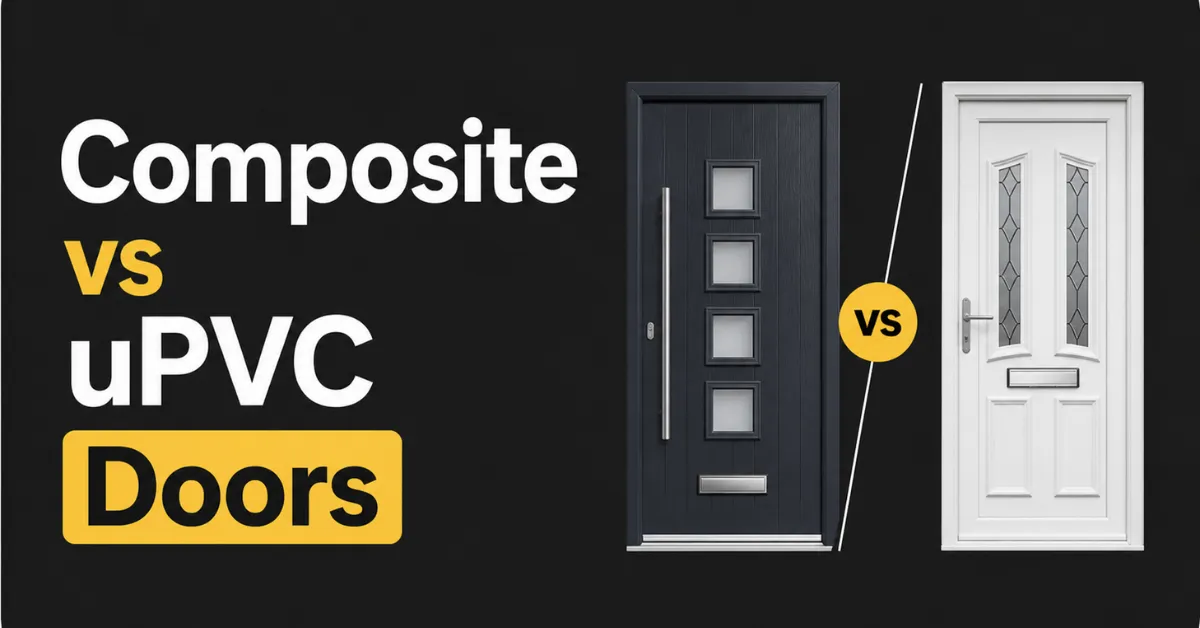
Choosing between composite vs UPVC doors is one of those decisions that looks simple on the surface, but gets more technical the deeper you go. Both are widely used across UK homes, especially in West Sussex areas like Worthing, Chichester, Lancing, and Shoreham-by-Sea, yet they behave very differently in real-world conditions.
A front door is not just an entrance. It affects heat retention, security, kerb appeal, and long-term maintenance costs. So the question is not just “which one looks better”, but which one performs better for your specific property and lifestyle.
This guide breaks everything down in a practical, no-nonsense way so you can confidently decide between UPVC vs composite doors without relying on sales talk.
Composite Door vs uPVC Door: What You Are Actually Comparing
Before comparing performance, it helps to understand what each door actually is.
A composite door is built using multiple layers. Typically, it includes a solid foam or timber core, reinforced edges, and a GRP (glass reinforced plastic) outer skin. This combination creates a dense, strong structure that mimics traditional timber but behaves far more efficiently in modern homes.
A uPVC door, on the other hand, is made from hollow plastic profiles with internal chambers designed to trap air. It is lighter, simpler in construction, and generally more affordable.
So when people compare composite doors vs UPVC, they are really comparing a multi-layer engineered product with a lightweight plastic-based system.
That difference shows up in almost every category that matters.
Security Comparison: Which Door Protects Better?
Security is one of the biggest reasons homeowners upgrade their front doors in the first place.
In the comparison of composite doors vs UPVC, composite doors consistently perform better in forced-entry resistance. The reason is simple: density.
A composite door has a solid core that makes it significantly harder to kick in or drill through. Combined with modern multi-point locking systems, it creates a strong physical barrier.
uPVC doors can still be secure, but their hollow structure makes them inherently easier to deform under pressure if lower-grade products are used.
Security features that matter in both systems include:
- Multi-point locking systems
- Anti-snap cylinder locks
- Reinforced frames
- Laminated glass panels for glazed sections
However, when tested in real burglary scenarios, composite doors generally outperform uPVC, especially in exposed or ground-floor locations.
For homeowners in coastal West Sussex towns where properties may face isolated wind exposure or rear access points, this difference becomes more relevant.
Thermal Efficiency: Keeping Heat Inside the Home
Energy efficiency is another key factor in the UPVC vs composite doors debate.
A composite door has a dense, insulated core that naturally resists heat transfer. This helps reduce draughts and improves overall thermal performance.
uPVC doors rely on internal air chambers to slow heat loss. While modern designs are much better than older versions, they still depend heavily on seal quality and installation precision.
In practical terms:
- Composite doors feel warmer to the touch in winter
- uPVC doors perform well but depend more on frame quality
- Poor installation affects both significantly
According to the Energy Saving Trust, reducing heat loss through doors and windows can noticeably improve household efficiency, especially in older UK properties.
In West Sussex homes where coastal winds are common, even small improvements in door insulation can reduce heating demand over time.
Design and Appearance: Kerb Appeal Matters
A front door sets the tone for the entire property.
This is where composite doors vs UPVC becomes very visually obvious.
Composite doors are designed to replicate traditional timber aesthetics. They can include textured woodgrain finishes, decorative glazing, and premium colour coatings. They suit both modern homes and older properties in conservation-style areas.
uPVC doors tend to look more functional. While modern versions now include coloured foils and improved finishes, they still have a slightly plastic appearance up close.
For homeowners focused on property value and kerb appeal, composite doors usually offer a stronger visual impact.
However, uPVC doors still work well for:
- Rental properties
- Utility entrances
- Budget renovations
- Modern builds with a simple design language
So while composite wins on premium aesthetics, uPVC still holds its place in practical applications.
Durability and Lifespan: Long-Term Performance
Durability is where long-term thinking becomes important.
Composite doors typically last 30 to 35 years when properly installed. Their GRP outer layer resists fading, cracking, and warping.
uPVC doors generally last around 20 to 25 years. They are durable but more affected by UV exposure over time, especially in south-facing installations.
In coastal areas like Worthing or Bognor Regis, this difference becomes more noticeable because salt air and wind exposure can accelerate wear on lower-grade materials.
So when comparing composite vs UPVC doors, composite clearly offers a longer service life, which can offset the higher initial cost.
Maintenance Requirements: Day-to-Day Reality
One of the biggest selling points of both systems is low maintenance.
Composite doors require:
- Occasional cleaning with mild soap
- Light hinge lubrication
- Basic seal inspection every few years
uPVC doors require:
- Regular wiping to maintain appearance
- Periodic gasket checks
- Light maintenance on locks and handles
Neither requires painting or sanding, which is a major advantage over traditional timber doors.
In real-world use, both are easy to manage. The difference is that composite doors tend to retain their appearance longer without showing signs of ageing.
Cost Comparison: Upfront vs Long-Term Value
Cost is often the deciding factor in composite door vs UPVC decisions.
Typical UK pricing:
- uPVC doors: £400 – £900
- Composite doors: £800 – £1,800
At first glance, uPVC looks significantly cheaper. But cost should be viewed across the full lifespan.
If a uPVC door lasts 20 years and a composite lasts 35 years, the long-term value gap narrows.
For homeowners planning long-term residence in West Sussex, composite doors often provide better lifetime value. For short-term ownership or rental properties, uPVC remains financially practical.
Environmental Impact: Sustainability Considerations
Sustainability is becoming more important in home improvement decisions.
Composite doors tend to have a lower lifecycle impact due to longer lifespan and improved insulation performance, which reduces heating demand.
uPVC is recyclable in theory, but recycling infrastructure is still limited in the UK. This means a portion of discarded uPVC products still ends up in landfill.
Aluminium and composite systems are generally considered more sustainable long-term choices compared to standard uPVC systems.
Real Installation Context in West Sussex Homes
Door performance is heavily influenced by installation quality and property type.
In areas like Worthing, Chichester, and Lancing, homes vary widely between:
- Victorian terraces
- Modern developments
- Coastal apartments
- Detached suburban houses
This means the best choice depends not just on material, but on installation environment.
For example:
- Older homes benefit from composite doors for insulation
- Rental properties often use uPVC for cost efficiency
- Coastal homes often prefer composite for durability
A properly fitted door from a professional installer is more important than the material alone.
This is why homeowners often rely on trusted local specialists such as Building Services in Worthing, where installation quality directly impacts long-term performance.
Common Mistakes Homeowners Make
Many homeowners choose between uPVC vs composite door based on price alone. This often leads to regret later.
Common mistakes include:
- Choosing the cheapest quote without checking specifications
- Ignoring security ratings
- Not considering exposure to weather conditions
- Overlooking installation quality
- Focusing only on appearance
Another frequent issue is mismatched expectations. A low-cost uPVC door will not perform like a premium composite system, even if they look similar in photos.
Which Door Should You Choose?
There is no single winner in the composite vs upvc doors comparison. The right choice depends on priorities.
Choose composite if:
- You want maximum security
- You plan to stay in the property long-term
- Kerb appeal is important
- You want better insulation performance
Choose uPVC if:
- Budget is the main concern
- You are upgrading a rental property
- You need a simple replacement solution
- The door is not a main architectural feature
Both options are valid. The key is matching the product to the property.
Why Professional Installation Matters More Than Material
Even the best door will underperform if installed poorly.
Proper fitting ensures:
- Correct sealing against draughts
- Secure frame alignment
- Long-term structural stability
- Compliance with UK building regulations
That is why many homeowners choose trusted professionals such as Windows & Door Installation in West Sussex, where fitting quality is prioritised alongside product selection.
A well-installed uPVC door will outperform a poorly installed composite door every time.
Final Verdict: Composite vs uPVC Doors
When comparing composite vs upvc doors, the conclusion is straightforward:
- Composite doors win on security, insulation, durability, and aesthetics
- uPVC doors win on affordability and practicality
There is no wrong choice, only a better fit for your home and budget.
For long-term homeowners in West Sussex, composite doors are often the stronger investment. For cost-conscious upgrades or rental properties, uPVC remains a reliable solution.
The best decision comes from balancing performance, budget, and how long you plan to stay in the property.
Frequently Asked Questions
Are composite doors better than uPVC doors?
Yes, in most performance areas, but uPVC doors are more budget-friendly and still widely used.
Do composite doors last longer than uPVC?
Yes. Composite doors typically last 30–35 years compared to 20-25 years for uPVC.
Which is more secure, composite or uPVC doors?
Composite doors generally offer higher resistance due to their solid core construction.
Are uPVC doors still a good option?
Yes, especially for rental properties or budget-focused home improvements.
Conclusion
Choosing between composite and uPVC doors is not just a design decision. It affects comfort, safety, and long-term property value.
If you are planning a wider renovation or home upgrade, you may also want to explore services like Building Services in Worthing, where door installation can be integrated with broader property improvements for better overall performance.
For tailored advice and professional installation across West Sussex,Sussex County Construction can help you choose the right door for your property and install it to the highest standard.
Because in the end, the best door is not just the one that looks good on day one, it is the one that performs for decades.
0 Comments