
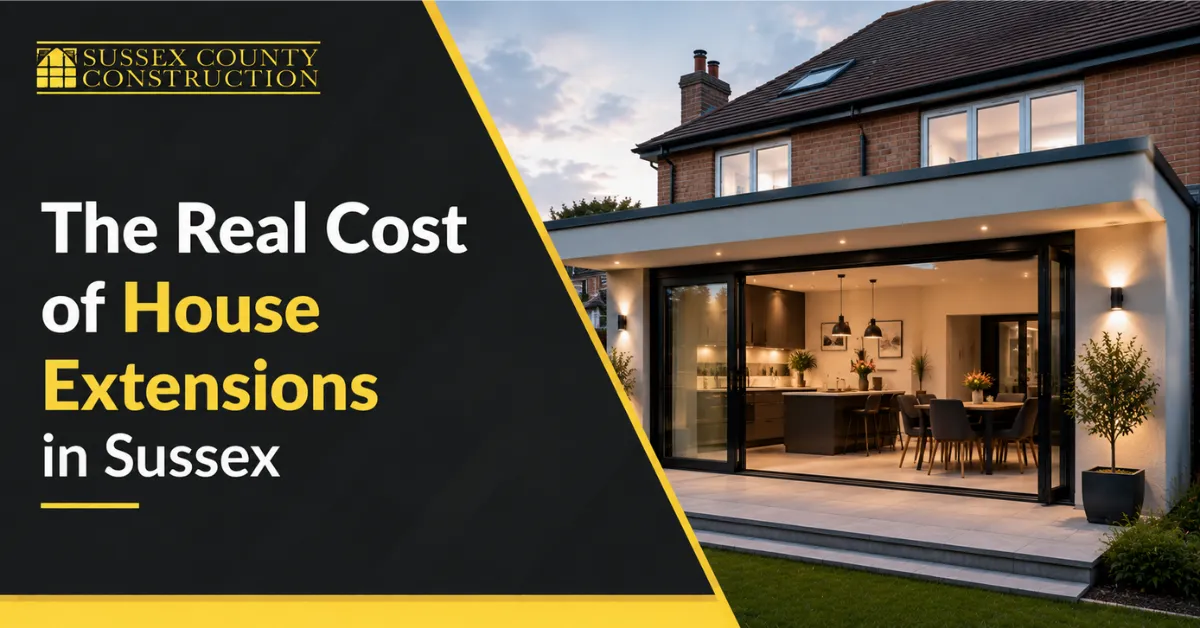
Moving to a larger home isn’t always the best solution when you need more space. Many homeowners find that extending their property is practical and cost-effective. It helps accommodate a growing family, create a home office, or add value to the home. However, understanding the house extension cost is essential before starting your project.
Extension prices vary depending on the size, design, materials, and complexity of the build. By understanding the factors that influence house extension costs Sussex homeowners typically face, you can create a realistic budget and reduce the risk of unexpected expenses. This guide explains what to expect when planning an extension in 2026.
What Is the Average House Extension Cost?
The cost of extending a house depends on the type of extension, the specification, and your property’s location. While every project is different, homeowners should expect costs to increase with larger floor areas, premium finishes, and more complex structural work.
As a general guide:
- Small single-storey extensions are usually the most affordable option.
- Double-storey extensions provide more living space but involve higher construction costs.
- Rear, side, wraparound, and bespoke extensions all vary depending on design complexity and site conditions.
Obtaining detailed house extension quotes from experienced builders is the best way to understand the likely cost of your specific project.
Factors That Affect House Extension Costs
Several elements contribute to the overall cost of an extension. Understanding these factors can help you make informed decisions when planning your budget.
Extension Size
The overall floor area is one of the biggest influences on cost. Larger extensions require more materials, labour, and longer construction times, naturally increasing the final price.
Although larger projects cost more overall, the cost per square metre may become more competitive as the project size increases.
Type of Extension
Different extension styles require different construction methods.
A single-storey extension cost is generally lower because it involves less structural work and simpler roof construction.
The cost of a double-storey extension is higher. This is because it needs extra foundations, structural supports, flooring systems, roofing, and internal finishing. Building upwards usually offers more value per square metre than making the same space on one level.
Materials and Finishes
Material choices have a significant impact on your final budget.
Premium brickwork, timber cladding, aluminium glazing, bespoke kitchens, underfloor heating, and luxury flooring all increase costs. Choosing durable, high-quality materials can provide better long-term value, but it’s important to balance your priorities with your available budget.
Labour and Construction Costs
Labour accounts for a substantial proportion of extension building costs in the UK; homeowners should plan for.
Your project may involve:
- Builders
- Bricklayers
- Carpenters
- Electricians
- Plumbers
- Roofers
- Plasterers
- Decorators
Experienced contractors may charge more than less established companies, but professional workmanship often reduces delays, defects, and costly repairs later.
Working with an experienced builder also helps ensure the project is completed safely and complies with current building standards.
Planning Permission and Building Regulations
Not every extension needs planning permission. However, some projects do, especially larger or more complex designs.
Even if you don’t need planning permission, you’ll usually need building regulations approval. This ensures the extension meets safety, structural, insulation, drainage, and energy efficiency standards.
Builders often assist homeowners with these approvals. This makes the whole project easier.
Don’t Forget the Additional Costs
Many homeowners focus only on construction costs and overlook other important expenses that should be included in their home extension budget.
Additional costs may include:
- Architectural drawings
- Structural engineer calculations
- Planning application fees
- Building regulations approval
- Site surveys
- Party wall agreements
- Utility connections
- Landscaping
- Interior decoration
- Flooring
- Kitchen or bathroom installation
It’s also sensible to set aside a contingency fund for unexpected issues, especially when extending older properties where hidden structural problems can sometimes be discovered once work begins.
How to Budget for Your Extension
Creating a realistic budget starts with understanding your priorities.
Ask yourself:
- How much additional space do you need?
- Which rooms are most important?
- Are premium finishes essential?
- Could the project be completed in phases?
- Is energy efficiency a long-term priority?
Having clear answers will help your builder recommend practical solutions that balance quality and affordability.
Many homeowners use an extension cost calculator early on. It helps them estimate costs before asking for detailed quotes. While these tools provide useful estimates, they shouldn’t replace a professional assessment of your property.
Getting Accurate House Extension Quotes
The best way to know your project’s cost is to get detailed quotes from trusted contractors.
A comprehensive quotation should clearly outline:
- Scope of work
- Materials included
- Labour costs
- Estimated construction timeline
- Payment schedule
- Any exclusions
- Warranty information
Avoid choosing a builder based solely on the lowest price. A significantly cheaper quotation may exclude important elements that could lead to additional costs later.
Instead, look for experience, transparency, quality workmanship, and a proven track record of delivering successful extensions.
Maximise Value Without Overspending
A well-designed extension should improve your home’s functionality while adding long-term value.
Simple ways to maximise your investment include:
- Choosing layouts that suit future family needs
- Incorporating energy-efficient insulation and glazing
- Using durable materials with lower maintenance requirements
- Designing flexible spaces that can adapt over time
- Working with experienced professionals from the beginning
Thoughtful planning often prevents expensive design changes once construction has started.
Plan Your Extension with Confidence
Knowing the cost of a house extension is the first step to a successful home improvement project. By considering extension size, materials, labour, planning requirements, and additional expenses, you’ll be in a much stronger position to create a realistic budget and avoid unexpected surprises.
At Sussex County Construction, we assist homeowners in Sussex. We design and build quality extensions that add practical living space and lasting value. Our skilled team supports you from planning and budgeting to construction and completion. We offer honest advice, clear quotes, and great craftsmanship at every stage.
Planning a house extension in 2026? Contact Sussex County Construction today. Share your ideas and get expert advice that fits your property and budget.
0 Comments