
How Long Does a Loft Conversion Take in Worthing, Sussex?
Key Takeaways:
- Generally, a loft conversion usually takes 4 to 10 weeks in Worthing. It largely depends on the type of loft conversion and the project’s complexity.
- The simplest loft conversion, such as a Velux loft conversion, is usually done in 4–6 weeks. But more complex ones, like Mansard loft conversions, can take 10 weeks or more. Read more about best loft conversion types for UK homes
- Also, generally, no planning permission is needed for a simple conversion under permitted development. But in restricted zones you might need approval. Our article on loft conversion regulations in West Sussex has more detail.
- Based on weather and seasons in Worthing, Sussex – spring and summer are the most suitable times. If you want ideas for design or case studies, check our stunning loft conversion in Worthing
How Long Does a Loft Conversion Take?
Converting the useless space of your home into a valuable addition is something every homeowner admires. But the biggest question is:
How long does it take to do a loft conversion?
Without a clear loft conversion timeline, things remain a little messy, and you remain confused.
That’s why Sussex County Construction has designed this detailed loft conversion timeline for you, especially in Worthing, Sussex. We’ll dive deep into:
- How long does a loft conversion take, depending on the loft type?
- What’s the duration of each phase in the loft conversion timeline?
- What unexpected factors can contribute to your loft conversion duration?
By understanding these factors in detail, you will be able to plan your loft conversion more effectively and avoid common problems that could prolong the project.
How Long Does It Take To Convert a Loft?
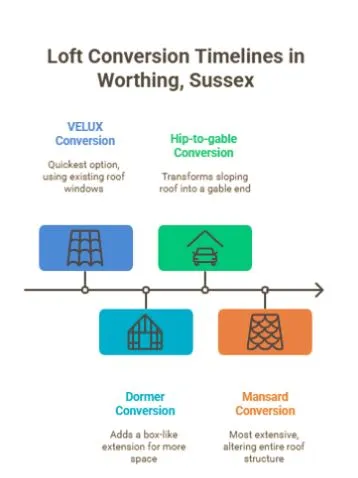
Generally, a loft or attic conversion takes 4 to 10 weeks in Worthing, Sussex. It largely depends on the type of loft conversion. So, let’s look at the time required for each loft conversion type.
- A VELUX loft conversion usually takes 4-6 weeks.
- A dormer loft conversion is usually done in 6-8 weeks.
- The timespan of the Hip-to-gable loft conversion ranges between 8 and 10 weeks.
- Mansard loft conversion generally takes 10-12 weeks or even more.
What’s The Duration of Each Phase in a Loft Conversion?
Loft Conversion is divided into 7 phases, and each phase has its own duration.
| Phase | Duration |
| Designing a Loft Conversion | 1 to 2 weeks |
| Planning and Permission | 4 to 8 weeks |
| Structural Work | 2 to 4 weeks |
| Roof Construction | 2 to 3 weeks |
| Insulation, Plastering, and Window Installation | 1 to 2 weeks |
| Electrical and Plumbing Work | 1 to 2 weeks |
| Final Touches | 1 to 2 weeks |
Designing a Loft Conversion
A good loft conversion starts with good design. At this stage, you can consult an architect or loft specialist to discuss your thoughts, budget, and aspirations. Your builder or contractor will do a site survey to evaluate your attic, roof size, height, ceiling, and potential structural issues. From these, initial drawings are produced, sometimes even 3D photographs, so you can truly visualize the area. Don’t fret if things aren’t right the first time; alterations are a common part of the process. When you’re happy with the final design, you’ll have a definitive plan to proceed with confidence.
Planning and Permission:
In this stage, patience is the key. In the UK, many loft conversions do not need full planning permission because they fall under permitted development rights. However, some projects do require planning approval—especially when major structural alterations are involved, or if your area is subject to local planning restrictions. For detailed guidance, see our loft conversion regulations in West Sussex
page.
The application process can take 4 to 8 weeks, which includes time for public feedback. If your project involves a shared wall, you might also need a Party Wall Agreement, which can take more time. No matter what permissions you need, you always have to follow building regulations. A skilled builder like Sussex County Construction makes sure all the paperwork is done right, helping you prevent annoying delays and keeping your project legal from the beginning.
Structural Work:
Now it’s time for the heavy lifting, literally. Your loft needs to be safe and strong, besides being a comfortable place to live. It often involves reinforcing the floor with new joists, installing steel beams, and replacing roof support if it’s needed. For dormer or mansard conversions, larger structural alterations are necessary.
Though this aspect of the loft conversion is usually a bit tiring, it’s critical; it establishes everything else. With an experienced builder, you can be assured that the structure is safe, sturdy, and will stand the test of time for decades.
Roof Construction ( If needed)
If your design incorporates a dormer, a roof lift, or a mansard, that’s where you might need roof alteration and permission regulation as well. Constructing a dormer, for example, increases your headroom and floor area, transforming a tiny attic into an excellent room. Experienced builders design your new construction, carefully join it with your current roof, and install tiles or slats for a smooth finish.
In this development stage, windows such as Velux skylights or dormer windows are also installed to illuminate your loft with plenty of natural light. It’s usually the first moment you get to watch your idea bear fruit as vacant roof space is converted into a functional room!
Insulation, Plastering, and Window Installation
Once the exterior building and roof construction are complete, construction progresses indoors. You would need to install insulation between walls, roof, and flooring to make your loft warm in winter, cool in summer, and conserve energy throughout the year. Good insulation can assist you with low energy costs for years to come.
Next, you will need to fix plasterboard to walls and ceilings, and sponged off for a smooth finish. When your new windows are installed, the loft begins to feel like a real room and not a building construction. At this stage, comfort and warm feelings start to emerge. And obviously, you don’t need to do these things yourself; your builder will do these things if it’s a part of your contract.
Electrical and Plumbing Work
Now it’s time to bring your loft to life with modern comforts. Electricians will run wiring for lights, sockets, and any underfloor heating or air conditioning. If you’re adding a bathroom or ensuite, plumbers will simultaneously install pipework and drainage. Typically, this work is split into two parts: the “first fix” (hidden infrastructure) and the “second fix” (connecting fittings, lights, and appliances).
Getting this right is essential; good planning avoids messy rewiring or pipe adjustments later. By the end of this stage, the room is functional, connected, and ready for finishing touches.
Final Touches
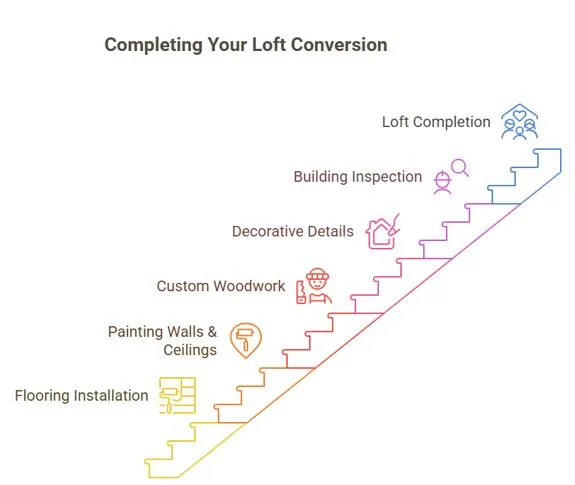
This is the exciting part when your loft actually becomes a finished, usable room. You put down the flooring, whether you like the warmth of carpet, the smooth look of wood, or the durability of tiles. Then you can paint the walls and ceilings, and add any custom woodwork or built-in furniture. Decorative details like skirting boards or railings finish the look. Finally, a building inspector will verify that everything complies with UK regulations. Once you have that approval, your new loft is officially ready. It’s a proud moment and the start of enjoying your new living space!
What Factors Affect How Long a Loft Conversion Takes?
Size of Your Attic:
Your loft size greatly impacts how long a loft conversion takes. A small loft with minor alterations might be completed within 1–2 weeks; however, a larger area involves more construction, insulation, and finishing work. For many homeowners, comparing dormer loft conversion or Velux loft conversion types helps understand how these choices impact both cost and timeline. See our guide on cost of loft conversion
to understand financial implications, which often correlate with scale and complexity.
Complexity of Conversion:
Not all loft conversions are equal. A basic Velux could take weeks with a few alterations, but a dormer, mansard, or loft with an en-suite could take months. Difficult designs consist of more structural changes, plumbing, or roof changes, and could increase your timeline.
Planning and Permissions:
If your project is subject to planning permission, you might have to wait a few weeks before even starting work. Sometimes even alterations within permitted development require certificates or a Party Wall Agreement. Delay in paperwork or approval can alter your commencement date, so it is advisable to submit early.
Weather Conditions:
The weather is more critical than you even think. In Sussex, rainy months might postpone building a roof or putting in a window. Hard rain, wind, or even frost can lead to unavoidable delays when doing work outside. Scheduling your construction during better months can help you avoid weather-related problems. The most suitable time for a loft conversion in Worthing, Sussex, is Spring and Summer.
Availability of Material:
Your loft conversion timeline is also partially tied to available materials. If customized fixtures, flooring, or windows are out of stock, some stages may pause until they arrive. Ordering ahead of time and working with reliable resources minimizes supply-chain interruptions. Also, your builder will take care of this if it’s a part of your contract.
Unexpected Issues:
Every construction work has surprises such as hidden weaknesses in the structure, tricky wiring, or plumbing problems. These unexpected issues can make your project take longer. Adding a small buffer of 10–15% to your timeline helps you feel more relaxed, making sure your conversion stays on track even if problems arise.
Homeowner’s Lifestyle & Accessibility Needs
If the loft is being converted into a bedroom, office, or rental unit, the extent of the finishing and accessibility (e.g., fire safety, custom stairs, or en-suite bathrooms) will add to the duration.
Experience of the Builder & Project Management
Working with seasoned professionals such as Sussex County Construction guarantees quicker schedules and smoother coordination throughout all phases. Inexperienced builders can lead to delays that push beyond weeks or even months.
Common Mistakes That Delay Loft Conversions
- Most residents hastily undertake loft conversions without waiting for planning approval, which results in annoying delays and even redesigns.
- Another trap is selecting inexperienced builders who can stretch a 6–8 week project to months.
- Neglecting plumbing or electrical specifications is another error that usually extends the timeline.
- In Sussex, weather conditions by the coast can have a large impact on the timing of projects. Roofs are frequently delayed by heavy rain and high winds, especially between the months of November and February.
That is why Sussex County Construction:
- Plan properly.
- We avoid these issues by working to a clear, structured timeline.
- We work around such seasonal issues in Sussex to keep your loft conversion on track.
Conclusion:
With that being said, we hope your query, “How long does a loft conversion take?” is completely clear to you. It can take 4-10 weeks generally, but depending on the loft conversion type, planning permission, or roof alteration if required, this time can extend a bit.
If you still have any questions or need guidance, our expert team at Sussex County Construction is always ready to help. Whether you’re interested in exploring different loft extension types or comparing property extension services in Worthing, feel free to reach out or contact us.
0 Comments